How STEM Camps Help Students See Math—and Teaching—as Possibilities
Cal Poly Pomona’s summer camps gave young learners hands-on experience with data, coding, ecosystems, and design while helping future educators practice serving diverse students.
Early experiences can change what students imagine
A summer camp may seem like a short-term enrichment opportunity, but Cal Poly Pomona’s recent programs show how quickly hands-on learning can influence a student’s sense of what is possible.
According to CPP News, three camps brought students from kindergarten through ninth grade onto the university campus for activities involving science, technology, engineering, art, mathematics, and sustainability. Campers came from public, charter, and private schools, as well as homeschooling and schools serving students with special needs.
That range matters. Students do not all encounter advanced STEM experiences through their regular school programs. A well-designed camp can give them access to university spaces, faculty, equipment, and mentors while making academic ideas feel connected to the world around them.
Making mathematics visible in the real world
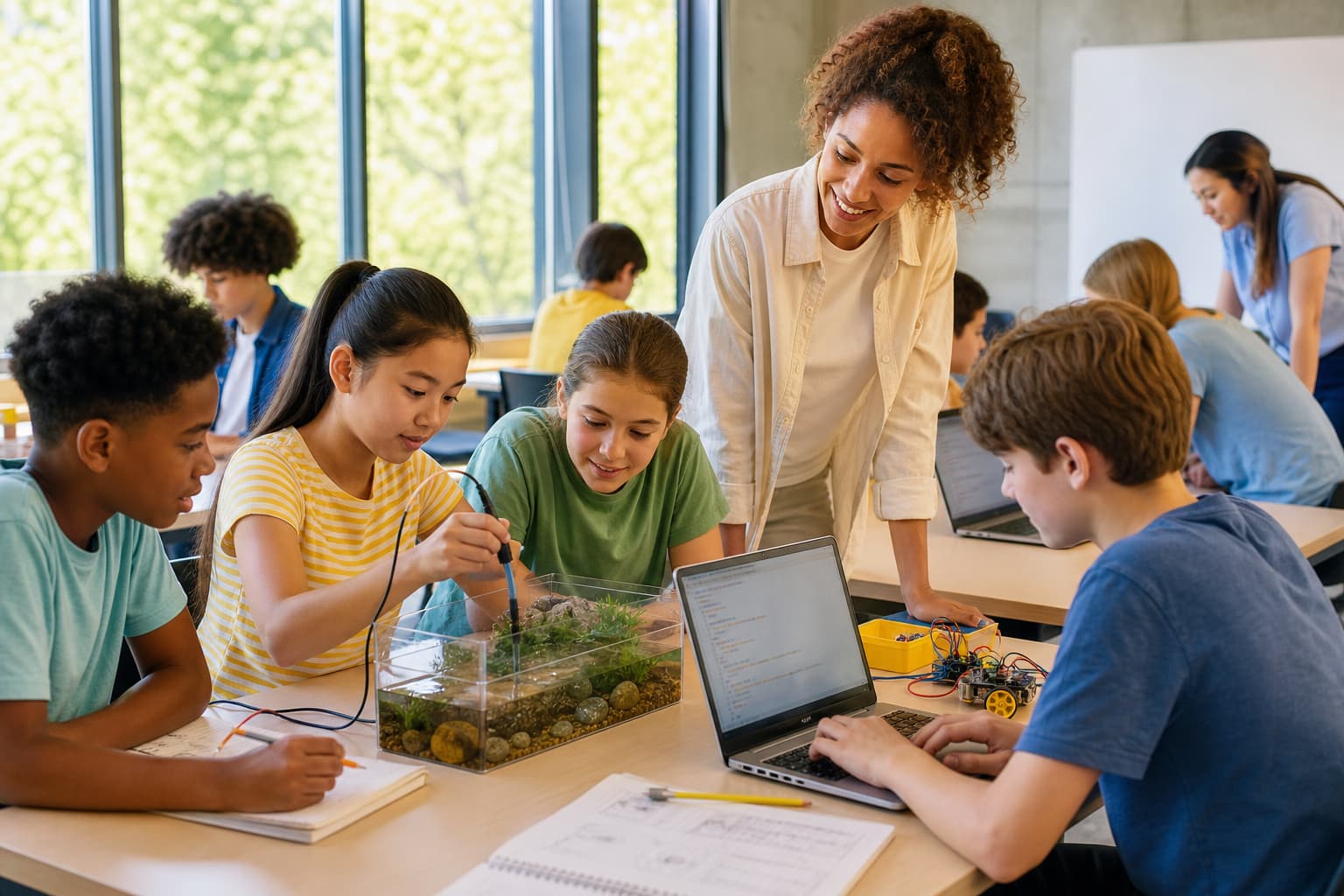
The camps did not treat mathematics as an isolated subject. Students collected air and water quality data, used mapping tools, tracked wildlife with camera traps, explored ecosystems, worked with pH and color theory, and built projects involving Micro:bit coding, motors, and programming.
These activities create natural opportunities to use mathematical thinking. Students must observe patterns, organize information, compare results, measure change, and make decisions based on evidence. They may not always experience those tasks as a traditional math lesson, but they are practicing skills that support success in mathematics and science.
For families, this is a useful reminder that math learning can happen through investigation and making—not only through worksheets or timed practice. A student who is hesitant about a textbook problem may become deeply engaged when the same reasoning helps explain water quality, wildlife, or how a device works.
The college setting can expand a student’s horizon
One young camper described her first visit to a college campus as an experience that made attending college and pursuing science feel possible. After seeing animals recorded by cameras the campers had placed, she began considering careers as a scientist or astronomer.
That kind of connection is one of the strongest features of the programs described in the article. Students were not simply told that college and STEM careers were available to them. They were given the opportunity to explore a campus, work on meaningful projects, and picture themselves belonging in those spaces.
The camps also included a Spanish-English bilingual program, STEMiLLiTAS, which served K–5 students through hands-on science, place-based learning, and multilingual storytelling. Making learning accessible across languages can help more students participate fully and see their backgrounds as assets in the learning process.
Future educators learned alongside campers
The programs were also designed to prepare the next generation of teachers. Credential students helped facilitate STEMiLLiTAS, while CPP student workers supported faculty-led activities and took part in preparation and daily reflection during the STRIVE Camp.
This gives future educators a chance to work with students from varied educational backgrounds before entering their own classrooms. They can practice explaining ideas, encouraging questions, adapting activities, and building engagement through projects.
For teachers and tutors, the lesson is practical: strong STEM instruction depends on more than knowing the content. Students need experiences that invite curiosity and connect learning to their communities. Educators need opportunities to observe how different learners respond and to adjust their support.
Cal Poly Pomona’s camps brought those two needs together. Young learners gained exposure to mathematics, technology, environmental problem-solving, and college life. Future educators gained experience serving real students. That combination can help make STEM learning more accessible, relevant, and welcoming for the communities those educators will eventually serve.