What Stronger Math Classrooms Can Look Like in Maine
A recent professional learning conference gave Maine educators practical ways to help students explain their thinking, approach challenging problems, and build confidence in mathematics.
Math learning is more than getting the answer
Maine educators are bringing new strategies into their classrooms after an August professional learning conference focused on building confident math learners.
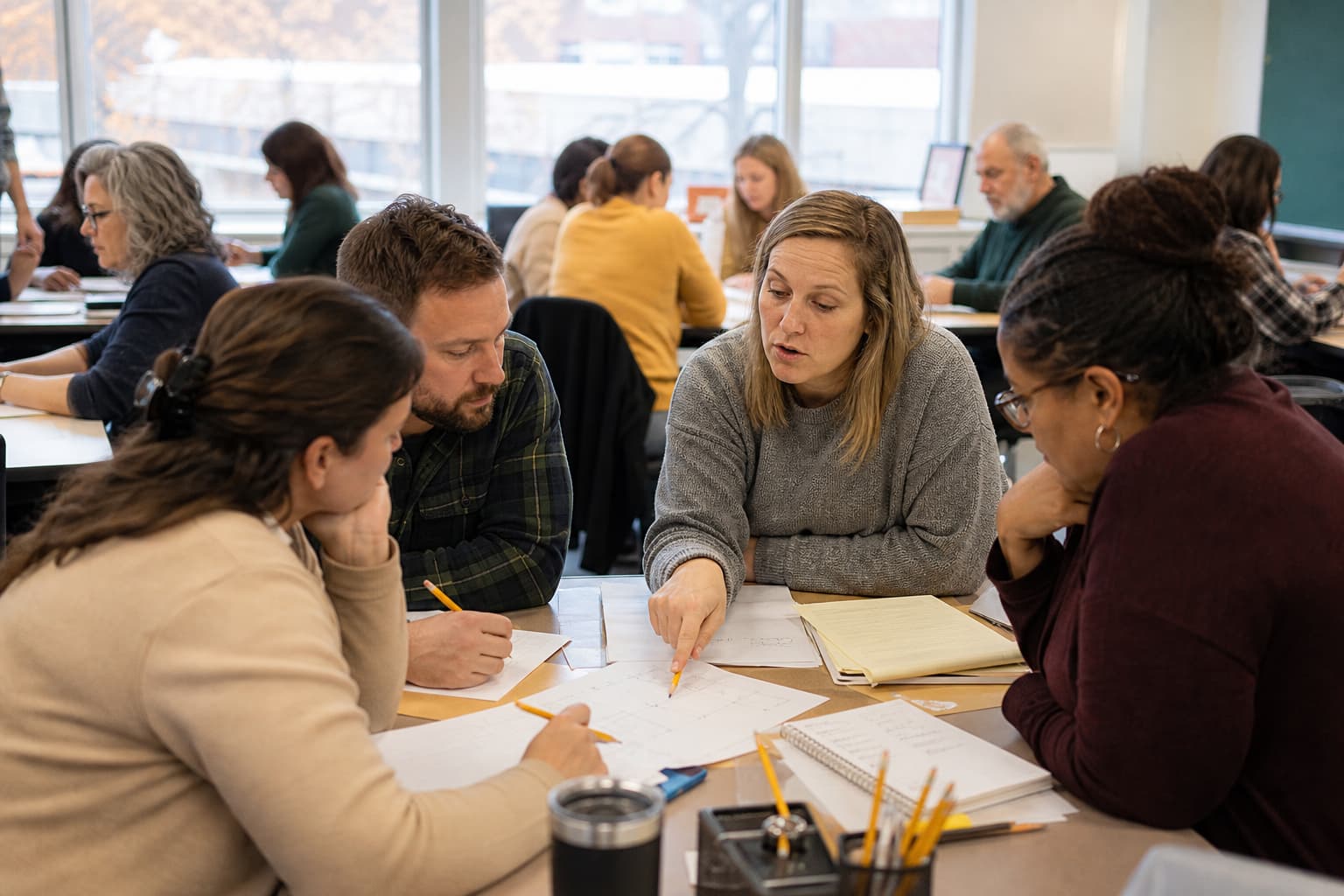
According to reporting by the Daily Bulldog, GEAR UP Maine RISE and Syntiro hosted the Building Confident Math Classrooms conference in Bangor on Aug. 18–19. The session was led by Dr. Bea Moore Luchin and brought educators together from different grade levels and school districts.
The central idea was practical and important: math instruction should help students understand how they think and solve problems, not only whether their final answer is correct.
That distinction matters. A student may arrive at the right answer by using a strong strategy, a partial understanding, or a lucky guess. Likewise, an incorrect answer can reveal useful reasoning that a teacher can build on. When students have regular opportunities to explain their process, teachers gain better insight into what students understand and where they need support.
Tools teachers can use right away
The conference introduced several classroom strategies, including questioning techniques, math vocabulary, observation checklists, and problem-solving routines. These tools can make student thinking more visible during everyday instruction.
For example, a teacher might ask a student to describe why a strategy worked, compare two possible approaches, or explain what information in a problem is most important. Using precise math vocabulary can also help students organize their ideas and communicate them more clearly.
Observation checklists may give teachers a consistent way to document how students approach problems. That information can be useful when planning follow-up instruction or deciding which students need more practice with a specific concept.
The article also highlights the value of giving students time to think before sharing. That pause can be especially helpful for students who need more processing time or who are hesitant to speak in front of a class. Peer-to-peer interaction offers another way for students to test their ideas and learn from different approaches.
Why this matters to families and students
Many students develop confidence in mathematics when they see that solving a problem can involve several steps, revisions, and questions. A classroom that values reasoning can make it easier for students to take productive risks instead of avoiding challenging work.
Families can reinforce this approach at home by asking children how they solved a problem, what they tried first, or whether there is another way to reach the answer. The goal is not to turn every homework task into a lesson. A short conversation about the process can help students recognize that their thinking matters.
Tutors can use the same principle. Rather than immediately correcting an error, a tutor might ask a student to explain the first step, identify the information they used, or compare two strategies. Those questions can reveal misunderstandings while also helping students become more independent problem-solvers.
Collaboration strengthens instruction
The conference also created an opportunity for educators from different districts and grade levels to learn together. That collaboration may be particularly valuable in Maine’s rural communities, where educators can benefit from sharing practical ideas across schools.
The Daily Bulldog reported that participating educators planned to adapt the strategies to their own settings. Some focused on documenting student thinking, while others planned to add more peer interaction or help students apply mathematics in different contexts.
Professional development is most useful when it leads to manageable changes in daily practice. The strategies described in this report have that potential because they focus on what teachers can observe, ask, and do during regular math instruction.
Helping students explain their reasoning will not remove every challenge from mathematics. It can, however, give teachers better information and give students more ways to participate in learning. That is a worthwhile direction for classrooms across Maine.