3, 6, 12, 24, ___
Show answer
48
Twenty arithmetic, geometric, alternating, and growing-difference patterns.
No email is required. Download the complete worksheet and answer key now.
Download the free PDF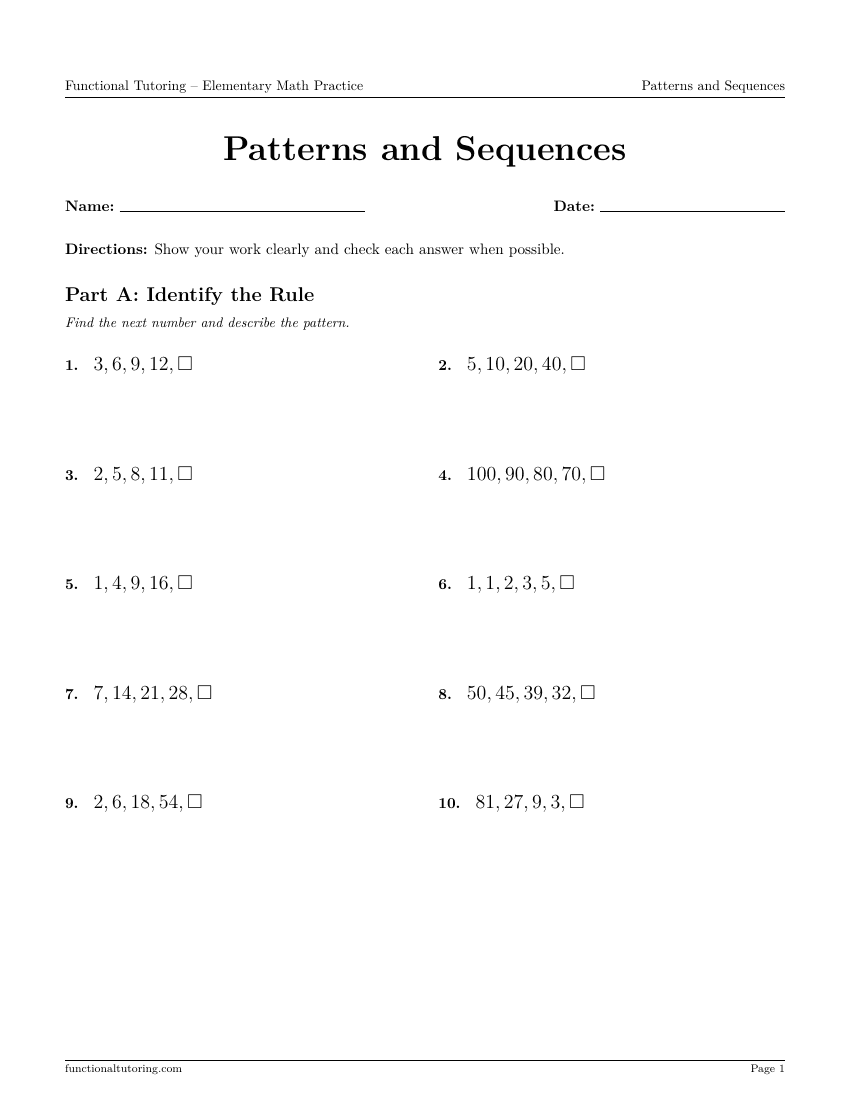
Use this patterns and sequences worksheet for guided practice, independent review, homework, tutoring sessions, or a quick skills check. The spacious layout is designed to leave room for students to show their work rather than guess from crowded answer choices.
After students finish, compare their reasoning with the included answer key. When an answer is incorrect, have the student locate the first step where their work changed direction before trying the problem again.
This resource is designed for grades 2-5 students working on elementary math. Teachers, tutors, homeschool families, and parents can preview the first page before deciding whether the level and spacing fit the student.
Looking for a broader sequence? Browse all Elementary Math worksheets.
A sequence follows a rule from one term to the next. Arithmetic patterns add or subtract a constant amount, while other patterns may multiply, alternate, or use position-based rules.
Compare consecutive terms before predicting. A valid rule must explain every displayed transition, not only the final pair.
Continue 5, 9, 13, ___, ___.
Solution: 17, 21; the rule is add 4.
Work each problem, then open the answer to check your result.
48
25
11