Why Art Education Belongs in Every Student’s School Experience
Arts education is not only for aspiring artists. It gives students meaningful practice with creativity, collaboration, revision, and thoughtful risk-taking—skills that support learning far beyond the studio or stage.
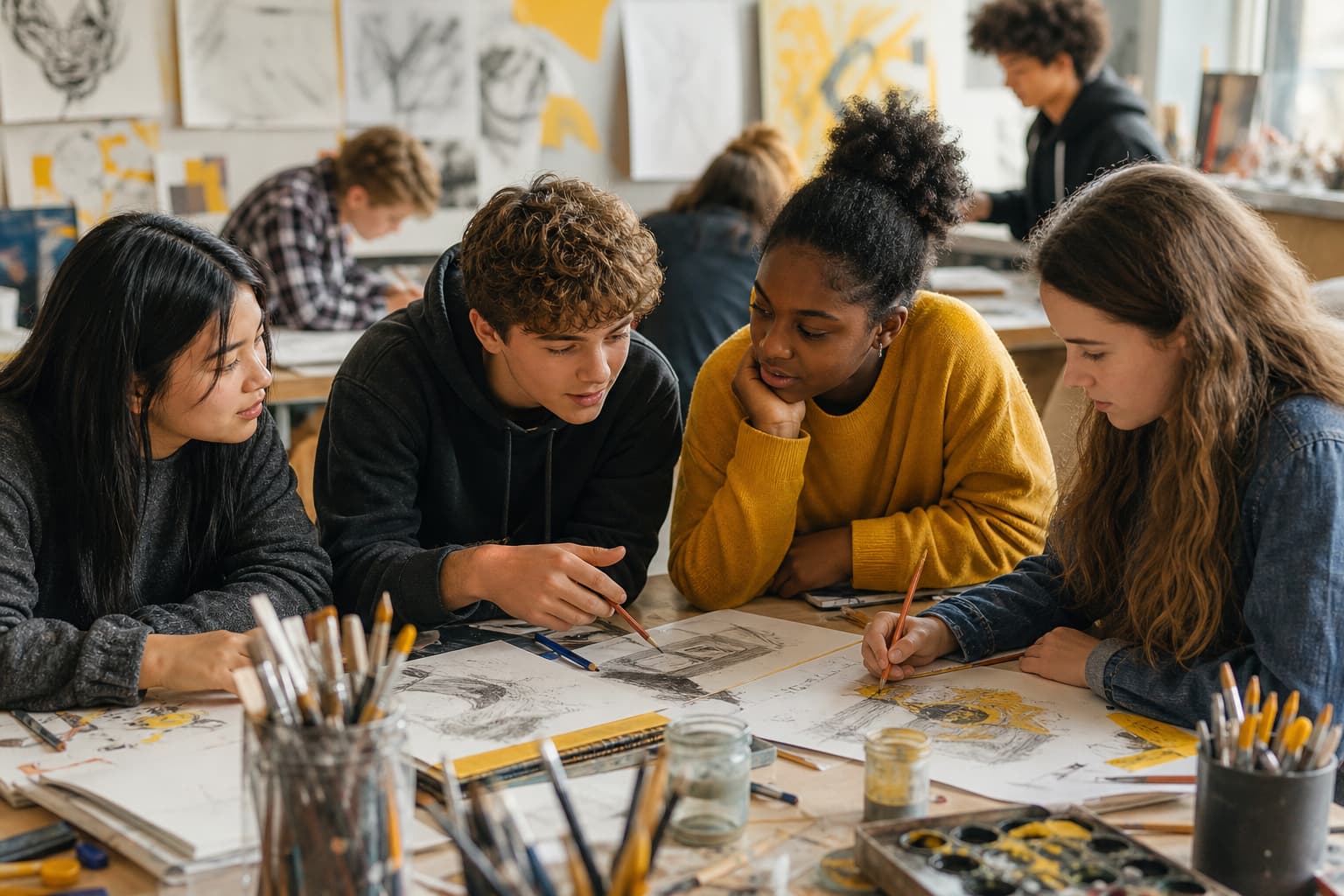
Art is more than a career pathway
In an opinion essay for the New York Daily News, arts educator Michael Robinson makes a straightforward case: Art education should be available to every student, including those who never plan to become professional artists.
That distinction matters. Schools often defend subjects by pointing to test scores, college admissions, or clearly measurable job skills. The arts can be pushed aside when schedules and budgets become tight because their benefits are less easily captured by a single score.
But students do not only need to learn information. They also need opportunities to develop judgment, imagination, confidence, and the ability to keep working when the answer is not obvious.
The value of work without an answer key
Robinson describes art classrooms and stages as places where students begin projects without knowing exactly how they will turn out. They make choices, receive feedback, revise their work, and sometimes start over.
That process is rigorous, even when there is no single correct answer. Students must observe carefully, explain their decisions, listen to criticism, and decide what to change. They learn that a disappointing first attempt does not have to be the end of the work.
For students, this can be an important counterbalance to school experiences focused primarily on right answers. A student who struggles with perfectionism may practice taking a manageable creative risk. A student who is used to succeeding quickly may learn patience through revision. Another student may discover a form of expression that helps them communicate ideas they have difficulty putting into words.
These experiences do not belong only to students who already see themselves as creative. Robinson argues that students can be academically strong, athletic, and artistically inclined at the same time. There is no need to force those interests into an either-or choice.
Why families should pay attention
Families may understandably focus on the subjects that seem most directly connected to grades, exams, or future careers. Those priorities matter. At the same time, students are preparing for lives that will require collaboration, flexibility, communication, and independent thinking.
Art education gives students a practical setting in which to practice those abilities. Group performances and creative projects require cooperation. Critiques require students to give and receive feedback. Revision builds persistence. Presenting finished work asks students to take ownership of their choices.
The benefits also extend beyond the students who eventually work in the arts. Robinson points to future engineers, teachers, doctors, entrepreneurs, parents, and citizens as people who can carry creative habits into many parts of life.
A place for productive struggle
One of the strongest ideas in Robinson’s essay is that art class is not an escape from demanding work. It is a different kind of demanding work—one that often makes uncertainty visible.
Students may spend hours on a project and still decide to discard part of it. They may need to defend an artistic choice, reconsider it after critique, or try a new approach after failure. In a supportive classroom, that struggle can be challenging without becoming punitive.
Teachers and tutors can reinforce this lesson by praising thoughtful experimentation, not only polished results. Asking a student what they noticed, what they changed, and what they might try next can make the learning process more visible.
Keeping the arts in the whole-child conversation
Robinson’s argument is ultimately about the purpose of education. Students need knowledge, but they also need practice imagining possibilities and expressing ideas with courage and care.
That is why arts education should not be treated as an optional reward or a subject reserved for future professionals. It is one of the places where students learn to create, revise, collaborate, and develop a voice of their own. Those are worthwhile outcomes—even when the student’s future has nothing to do with an art career.